
The Three Things We’ll Uncover
Financial Cost
The Money You Can’t See Leaving
Operational Cost
Where Your Staff Hours Actually Go
Clinical Cost
When Patients Leave Without
the Vaccine They Needed
Most practices know what they pay for vaccine inventory. Few know what they’re actually paying to run the program. That’s not a failure of attention. It’s a consequence of a model that was never designed to make the full cost visible. Why?
Because vaccines used to be easy. Today, everything around them is complicated. The buy-and-bill model made sense when formularies were narrow, payer rules were predictable, and the administrative load was manageable. That’s no longer the environment most practices operate in. Immunization schedules have grown, payer complexity has increased, and documentation requirements continue to rise.
The model hasn’t kept pace, and the gap between what the model was designed for and what practices actually deal with today doesn’t disappear. It gets absorbed, quietly, in places that rarely show up on a budget report.
That true cost? It hides in three places: what it’s costing your cash flow, what it’s costing your staff, and what it’s costing your patients. Together, they add up to more than you may think.
Understanding these three pillars can help you see your vaccine program with fresh eyes. Here’s a closer look at each one, and what it means for your practice.
Financial Cost
The Money You Can’t See Leaving
The price of a dose is only the starting point. Once you add reimbursement delays, waste, and the capital invested in vaccines, the true cost of a vaccine program runs higher than most practices realize. The American Academy of Pediatrics (AAP) found that reimbursement must run 17% to 28% above a vaccine’s purchase price just to break even. And while learning the purchase price feels like profit, it’s often actually a loss.
Practices need 17%–28% above a vaccine’s purchase price just to break even.
American Academy of Pediatrics (AAP)
The $15,000 — or more — sitting in your fridge
Let’s start with all the capital that’s tied up in your practice’s refrigerators: thousands of dollars (per provider) are traded for vials of vaccines, all with different timelines for when precisely you’ll be reimbursed for them. Depending on eligibility and authorization, reimbursement can take weeks to months for a single dose. For an expense that’s second only to payroll, vaccines tie up a significant amount of cash in a process with no immediate or guaranteed return.
This is the way the system for vaccination has been set up in healthcare, and it’s a huge liability for many practices. In order to provide vaccines — a nonnegotiable in medicine today — you must invest an extraordinary amount of money into a process that doesn’t have a 100% rate of return.
In fact, many practices are actually losing money on their vaccine program. According to proprietary VaxCare research, most practices experience an 8% to 15% bottom line loss on vaccines without even knowing it.
Your vaccine stock’s opportunity cost
Every dollar sitting in vaccine inventory is a dollar that can’t be invested in staff, training, supplies, rent, or other forms of overhead that help keep the lights on. This creates an opportunity cost: Even if all those doses are reimbursed, the practice has already absorbed the upfront expense and carried the financial risk during this waiting period.
For small and mid-sized practices, that cash flow pressure can limit flexibility, slow hiring, delay improvement, and make the vaccine program feel less like a predictable revenue stream and more like a standing financial obligation. For health systems that obligation averages $16 million in vaccine inventory sitting at risk at any given time.
The inherent financial gamble in forecasting and ordering
Forecasting and ordering the right amount is nearly impossible when patient cancellations, expirations, and staff errors constantly shift how many vaccines get used and billed
This guesswork can lead to either overstocking and wasting money on expired vaccines, or understocking and having to turn away patients to retail clinics and miss out on potential revenue.
Underlying all of this, of course, is the constant fear of a backup generator malfunctioning during a power outage. This is a real threat for organizations with so much money tied up in vaccines in their refrigerators.
Overly complicated reimbursement processes
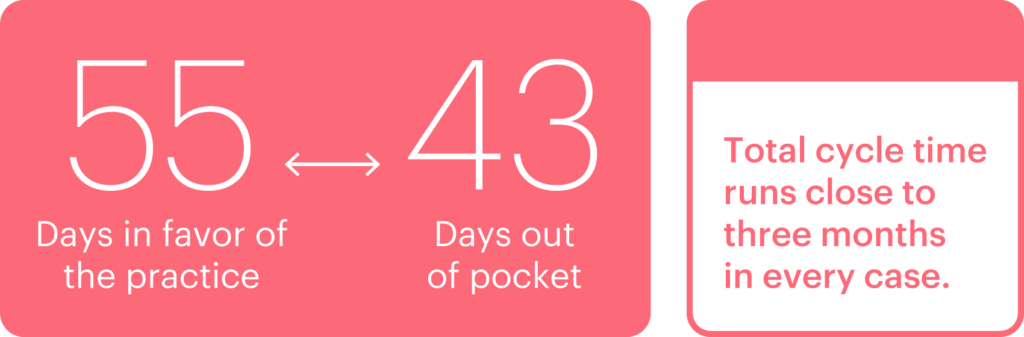
Even when inventory is managed carefully, reimbursement is hard to track cleanly. Every dose runs on two cash clocks at once: how long capital is tied up before reimbursement arrives, and how long the practice has before payment is due. Cash exposure alone ranges from about 55 days in the practice’s favor to about 43 days out of pocket. Total cycle time runs close to three months in every case.
That makes it difficult for practices to see what has been paid, what is still pending, and what may never be recovered. As a result, many vaccine programs generate activity without generating clear financial visibility. By year-end, practices may know how many vaccines they bought and administered, but still struggle to measure what those doses actually returned.
Cash Exposure Range
The chasm between revenue and profitability
Revenue is the money your practice brings in from administering vaccines, but profitability remains after every related cost is accounted for, and that’s where things get tricky.
A vaccine program can appear successful on paper because it generates steady reimbursement, yet still creates financial strain if the purchase price, storage requirements, staff time, claim delays, wastage, and administrative work outweigh what is ultimately collected.
In other words, revenue shows activity, while profitability shows whether that activity is sustainable for the practice.
Operational Cost
Where Your Staff Hours Actually Go
The direct financial costs of a vaccine program are only part of the story. Another overlooked part is often operational: the number of people, steps, checks, data fields, and compliance decisions it takes to move one dose from delivery to administration to billing. In practice, that can mean more than 40 distinct data points captured and reconciled across documentation, billing, inventory, and registry reporting for a single dose.

How workflow complexity creates operational risk
Most vaccine workflows were built for an era when inventory moved more slowly, payer rules were less complex, and long-tenured staff members could hold the process together through habit and institutional memory.
Today, this same manual infrastructure must support:
- Vaccine forecasting and purchasing
- Delivery intake
- Storage checks
- Lot tracking
- Eligibility screening
- Dose selection
- Administration documentation
- Registry reporting
- Claim submission & follow-ups
- Inventory reconciliation
- Expired or recalled inventory
On average, there are up to nine handoffs between delivery and administration, and each handoff adds a step, a delay, and a point of risk. Fat finger a lot number entry, select the wrong stock type, or use the wrong billing modifier, and the practice often won’t catch it until the claim is delayed, denied, underpaid, or flagged for review. By then, tracing it back takes time no one has.
The result is a workflow that runs on individual diligence rather than a reliable system. It works until a key staff member leaves, a payer rule changes, or volume climbs. Then the cracks show, and the cost of holding it all together keeps rising.
Every vaccine takes up precious nurse time
A vaccine encounter looks simple in the exam room, but the real work starts well before the syringe reaches the patient.
For a single dose, a nurse must:
- Confirm eligibility
- Pick the correct product and funding source
- Check expiration date
- Verify temperature status
Then comes the documentation of lot, manufacturer, route, site, date, and administrator. After that, the nurse provides the required patient information, updates the immunization record, and starts the billing process.
That’s eight or more discrete tasks for one shot. None of that time shows up on a claim. It’s clinical staff labor spent on administrative work, pulled away from patient care.
Now stretch that across a full day. A nurse who administers 20 vaccines a day runs through those steps 20 times over, and the minutes add up fast. What reads like a few seconds per task becomes 30+ minutes of documentation, verification, and data entry by the end of a shift. Across a week, that’s a full day of clinical time spent on paperwork instead of patients. The people best equipped to counsel a hesitant patient or catch a missed screening are the same people buried in fields and drop-downs.
The complexity also raises the odds of a mistake. Each task is a decision point, and each decision point is a place where something can go wrong. Grab the wrong funding source, mistype a lot number, or skip an eligibility check during a busy afternoon, and the error often hides until a claim comes back denied.
Across a week, a full day of clinical time is spent on vaccine paperwork instead of patients.

The effects of staff turnover on vaccine program consistency
The deeper issue is that most of this manual process often lives in someone’s head. The staff member who knows which product goes with which funding source, when to reorder inventory, and where every step can go wrong, that knowledge rarely gets written down.
So, when that person leaves, the process leaves with them. And in these roles, people leave often — medical assistant turnover runs as high as 59%. When more than half of your team can turn over in a year, a workflow built on memory and habit is a risk waiting to surface. Every departure means retraining, missed steps, and errors that don’t show up until a claim is denied weeks later. The practice pays twice: once in lost knowledge, again in the time it takes to rebuild it.
Clinical Cost
When Patients Leave Without the Vaccine They Needed
The financial and operational costs of a fragmented vaccine program are clear once you learn what to look for. The clinical cost, on the other hand, is harder to see, but from a patient-care standpoint, it carries the most weight.
When eligibility, inventory, documentation, and workflow don’t connect, more patients leave without the vaccines they need. That gap starts with one missed dose and grows from there, ultimately affecting public health far beyond a single missed dose.
Overall vaccination numbers are in a nosedive
In the U.S., adult vaccination coverage remains stubbornly low. Only 22.8% of adults aged 19 and older were up to date on their age-appropriate vaccines, according to Centers for Disease Control and Prevention (CDC) National Health Interview Survey data. Among adults aged 50 to 64, that number drops to 14.7%, right as their risk for vaccine-preventable disease climbs.
Children aren’t faring better. During the 2024-2025 school year, kindergarten vaccination coverage in the U.S. declined for every reported vaccine compared to the year before, per CDC reporting. Each drop widens the pool of unprotected patients — and in turn the broader community in which they live — and this all compounds over time.
Many practices are giving fewer vaccines as well, but may not realize it.
Most providers assume their numbers are holding steady, but few have the data to know for sure. The decline doesn’t announce itself. It shows up quietly, one patient at a time, in people who were due but never received the shot they needed.
Part of the problem is that many traditional vaccine programs have no proactive engagement built in. There’s no recall system, no reliable way to surface who’s due, and no prompt to act on it in the moment. The workflow captures the patients who ask. It rarely catches the ones who don’t.
That’s borne out in what patients report. In a CDC study of adults behind on recommended vaccines, 46.4% said they would accept one on the spot if a provider simply offered it. The intent to protect the patient was there. The system that would have made it happen wasn’t.
This gap is most apparent in adult care. Pediatric care runs on routine well visits, which build in repeated, predictable chances to catch someone up. Adult care works differently. A patient comes in for a specific reason, often something acute, and leaves once it’s handled. The opportunity to give vaccines doesn’t come as often, which often leads to fewer people getting them.
Nearly half of under-vaccinated adults would accept a vaccine if it were offered on the spot.
The public health consequences are measurable and significant.
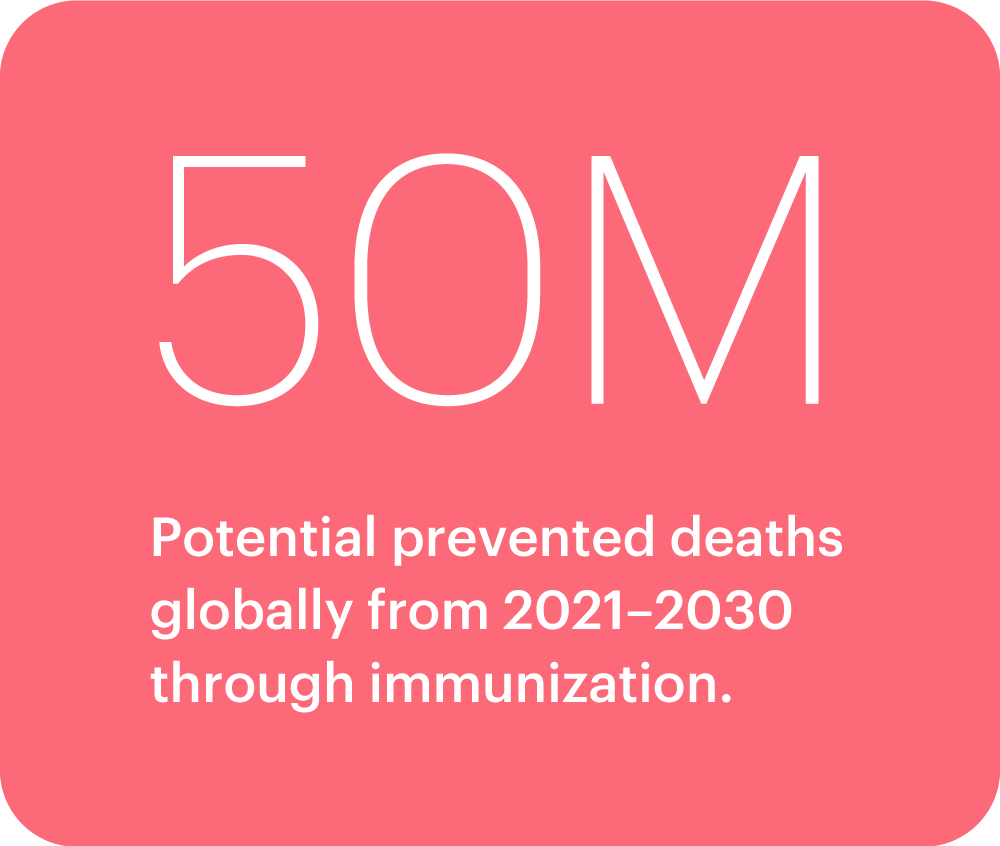
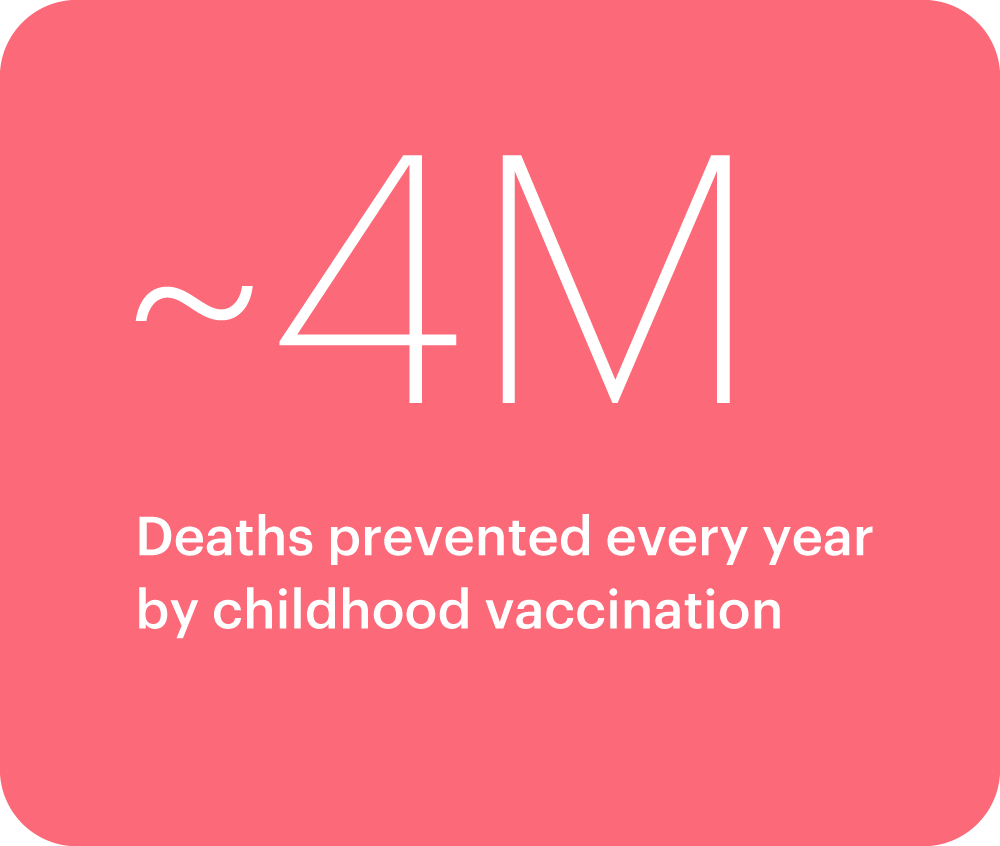
The stakes are concrete. Childhood vaccination prevents roughly 4 million deaths worldwide every year, according to the Centers for Disease Control and Prevention (CDC). Between 2021 and 2030, immunization has the potential to prevent more than 50 million deaths globally. Measles vaccination alone could save nearly 19 million lives by 2030, per the American Medical Association (AMA), while hepatitis B vaccination could account for another 14 million. These numbers reflect what happens when vaccine programs work. The inverse reflects what happens when they don’t.
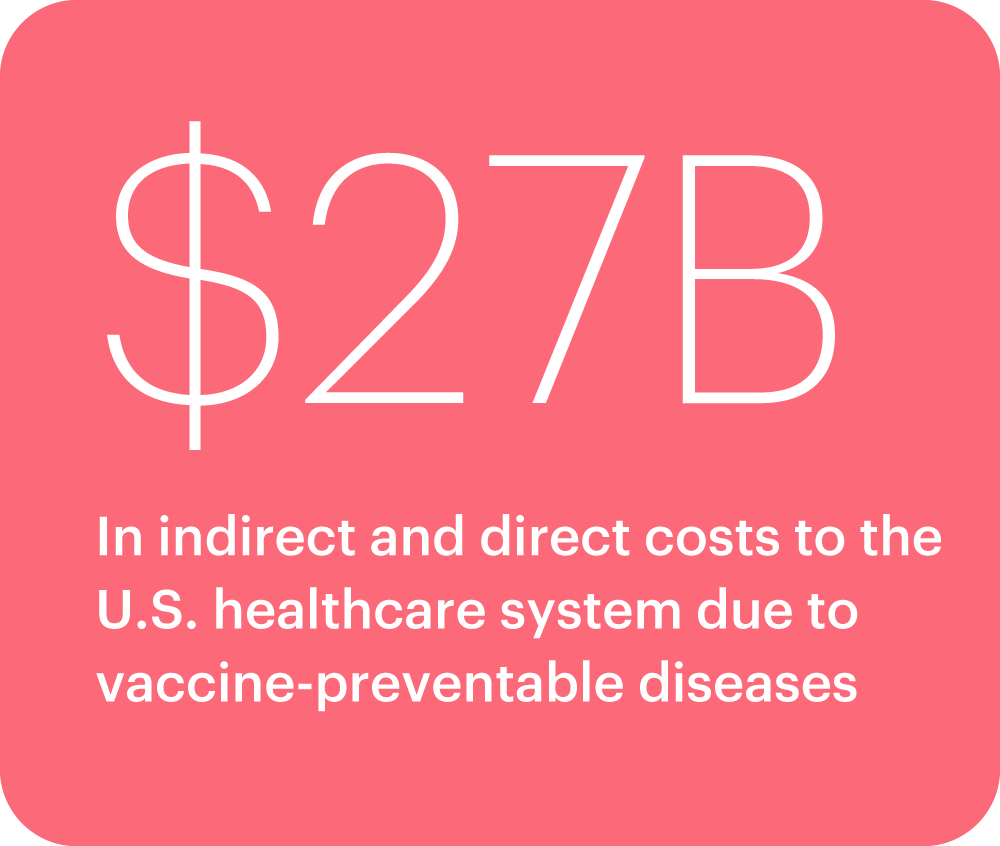
The effects compound quickly at scale. Vaccine-preventable diseases cost the U.S. healthcare system an estimated $27 billion annually in direct and indirect costs. A drop in coverage of even a few percentage points can push communities below the herd immunity threshold for diseases like measles, which requires about 95% coverage to contain. When that threshold drops, outbreaks follow. The 2019 U.S. measles outbreak, one of the largest in decades, was tied directly to pockets of low vaccination coverage.
Even a small drop in vaccination rates can leave hundreds of thousands of people vulnerable. The gap between the care a practice intends to deliver and the care its systems can support every day is where that clinical cost takes shape. Closing it starts with a vaccine program that keeps doses available, reduces workflow complexity, and makes vaccination easier to deliver reliably.
Too Much Complexity to Absorb It Alone
We’ve seen what a traditional vaccine program looks like from the inside. The manufacturer price increase that nobody budgeted for. The claim denial that surfaces three months after the fact. The immunization rates should be higher with no clear explanation why. The vaccine coordinator holding everything together by a thread.
We know this world. That’s why we built a new model that’s proven to solve all of it.
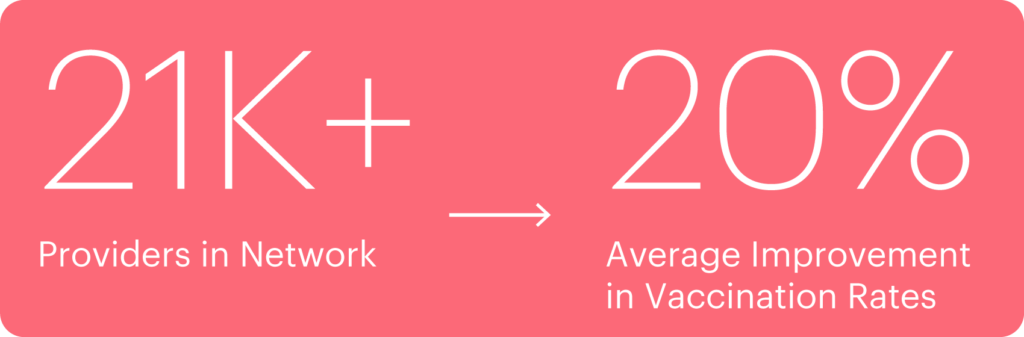
VaxCare has been running vaccine programs for more than 15 years across a network of 21,000+ providers. With VaxCare, your practice never ties up cash flow in vaccine inventory again. Your vaccine workflows run automatically from ordering to documentation. Your claims are billed and adjudicated through our payer contracts, so you are paid directly for every dose administered. And your patients come back for the vaccines they need through recall and adherence programs that run without any lift from your team
The result is a vaccine program that partners with you instead of against you. More control. Greater impact. Practices in our network have seen patient immunization rates improve by an average of 20%. Not a marketing claim. A peer-reviewed published finding.
The hidden costs we’ve described in this article are real. But they aren’t inevitable. The first step is to see the full picture of what your program is actually costing you. See exactly what your vaccine program looks like with VaxCare behind it, from purchasing to payment to patient reminders. In 15 minutes, you’ll know if it’s right for your practice.
VaxCare’s Effect
Reinvent your vaccine program.
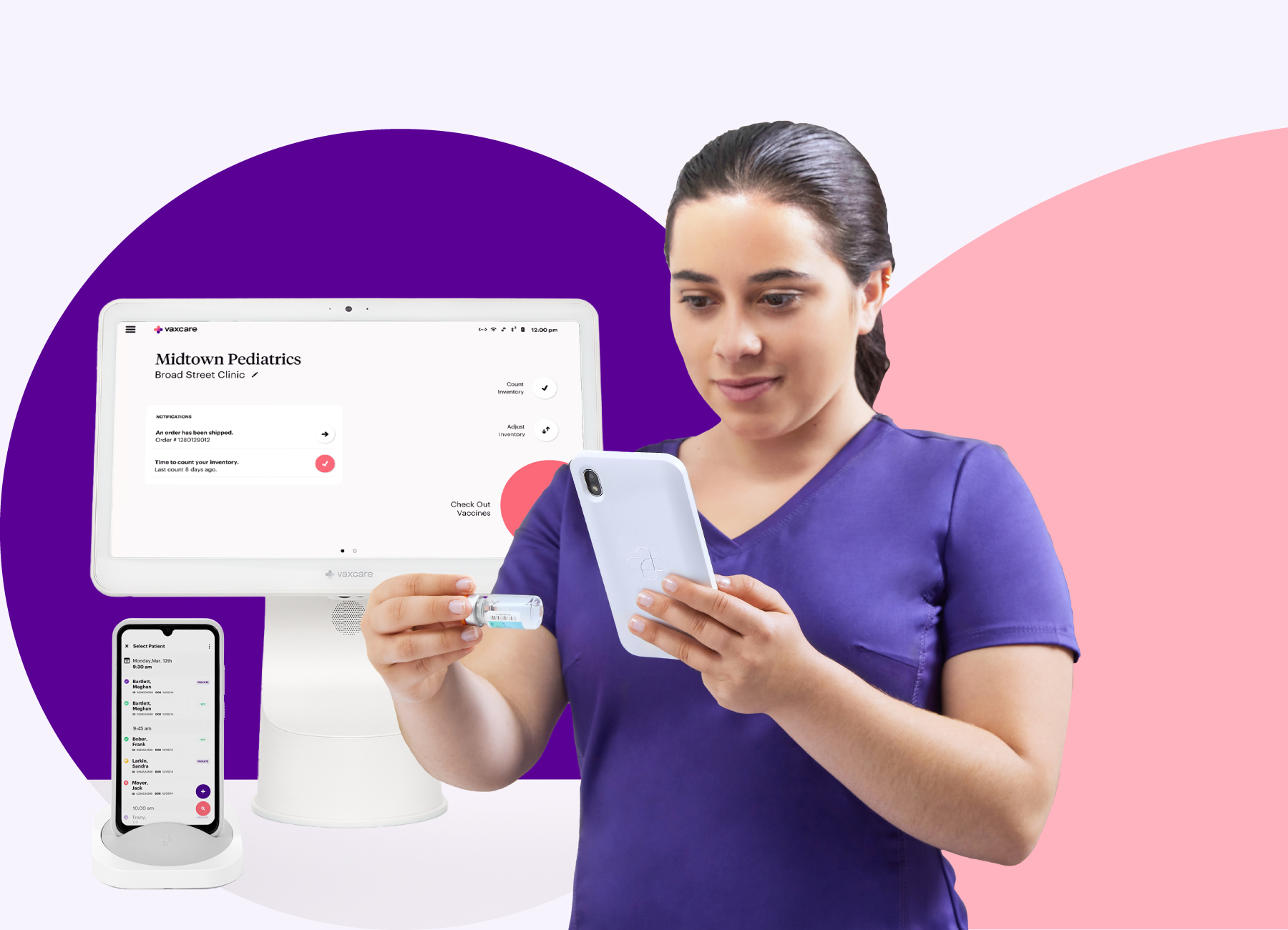
VaxCare simplifies, optimizes, and elevates vaccination workflow for practices and staff—so you can get back to caring for your patients.
Related Articles

CHRISTUS Health and the Drive for Visibility, Economic Efficiency and Standardization
Learn how Christus Health evolved its vaccine program with VaxCare, lowering costs and increasing revenue across its 100+ clinics.

The Ultimate Vaccine Management Plan Blueprint
Discover your vaccine program’s strengths and identify areas where a vaccine management plan can have the most significant impact.
Appalachian Mountain Health is Bringing Confidence to Contraception
See how Appalachian Mountain Health transformed the LARC patient and practice experience with VaxCare.